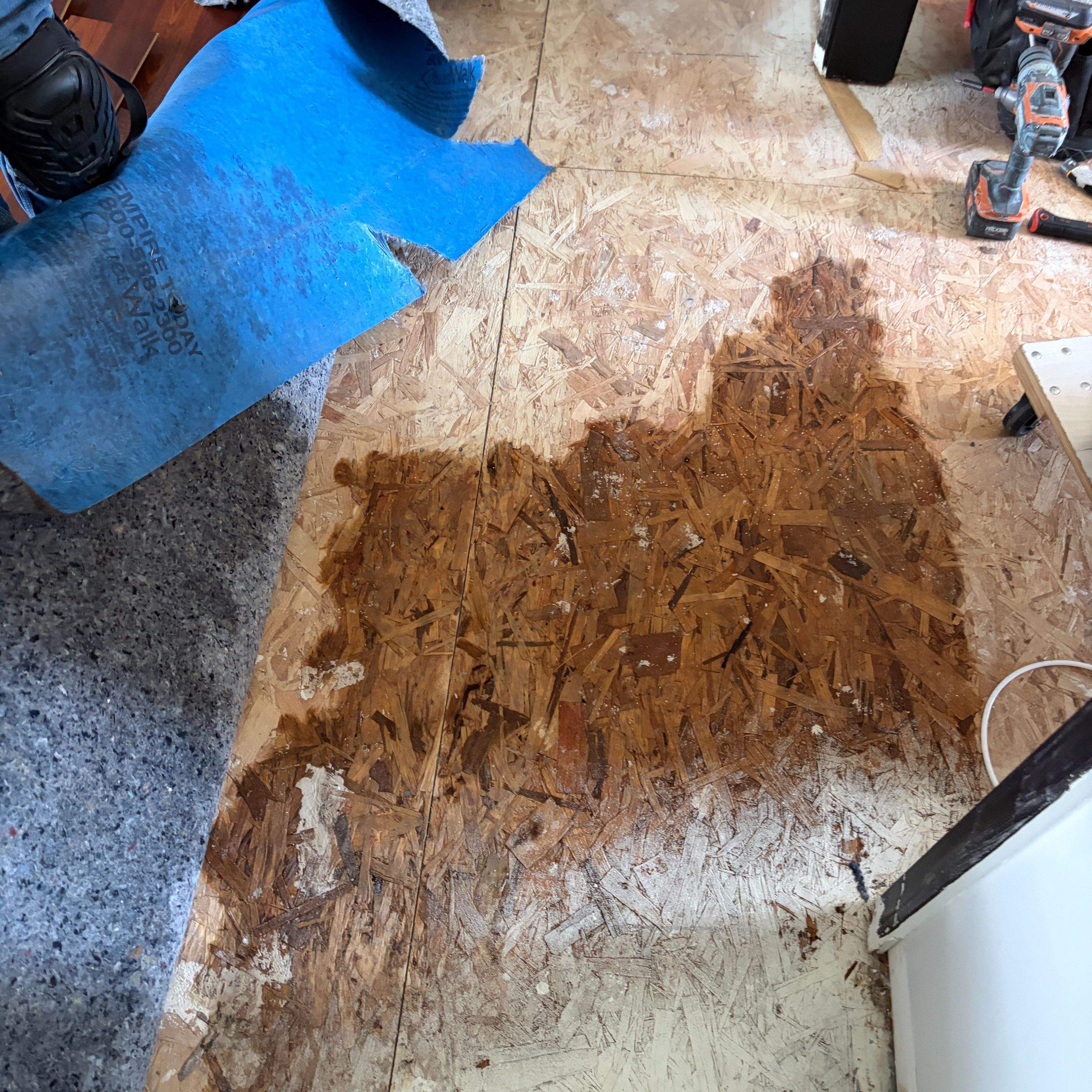
Why Hidden Water Damage Behaves Differently Than Visible Leaks
A visible leak forces action. You see water on the floor, you grab towels, you shut off a valve. Hidden water damage gives you no such trigger. Instead, it expresses itself through indirect symptoms: a faint smell, a slightly warped baseboard, a utility bill that crept up twenty dollars last month. The IICRC S500 standard recognizes that moisture migrates along the path of least resistance, which in most Gas City homes means down through subflooring, sideways along wall plates, and into wall cavities where insulation acts like a sponge. By the time you see a stain on the ceiling, water has typically been moving for two to six weeks.
That delay is what makes early detection so financially important. A leak caught in week one might cost six hundred to fifteen hundred dollars to dry and repair. The same leak caught in week six, after mold has colonized and subflooring has delaminated, can easily run eight thousand to twenty thousand. Our crews see the difference daily, and insurance adjusters in central Indiana are increasingly strict about denying claims where homeowners ignored visible warning signs. Reading the early signals correctly is both a financial decision and an insurance decision.
The building science behind this is straightforward. Drywall, OSB subflooring, and fiberglass insulation are all hygroscopic, meaning they absorb and hold moisture rather than shed it. A single cup of water released inside a wall cavity can saturate four to six square feet of drywall and the framing behind it. That moisture then evaporates slowly into the wall cavity, raising humidity in adjacent materials and creating the chain reaction that produces musty smells, paint failure, and eventually mold colonization. Understanding this cascade is what separates a quick dry out from a full reconstruction project.
The Complete Hidden Water Damage Comparison Table
The table below maps the warning signs we encounter most often in Gas City homes against their likely sources, urgency, detection method, and typical cost if addressed promptly versus ignored. Use it as a triage tool, not a final diagnosis. A moisture meter reading is the only way to confirm what is actually happening inside your walls and floors.
| Warning Sign | Likely Source | Urgency | How We Detect It | Cost If Caught Early | Cost If Ignored 30+ Days |
|---|---|---|---|---|---|
| Musty smell in one room | Wall cavity moisture, hidden mold growth | High | Thermal imaging, air sampling | $800 to $2,400 | $5,000 to $15,000 |
| Water bill up 15% or more | Slab leak, supply line pinhole, toilet flapper | High | Pressure test, acoustic listening | $1,200 to $3,500 | $8,000 to $25,000 |
| Warped or cupping hardwood | Subfloor saturation from below | Critical | Pin moisture meter, crawl space inspection | $1,500 to $4,000 | $10,000 to $22,000 |
| Peeling paint near baseboards | Wicking from wet sill plate or floor | Moderate to High | Non invasive moisture scan | $600 to $1,800 | $4,500 to $12,000 |
| Ceiling stain that grows | Roof leak, supply line above, HVAC condensate | Critical | Attic inspection, thermal imaging | $900 to $2,800 | $6,000 to $18,000 |
| Cold spot on wall or floor | Evaporative cooling from active leak | High | Infrared camera scan | $700 to $2,200 | $5,500 to $14,000 |
| Bubbling drywall or wallpaper | Active or recent water intrusion | Critical | Cavity probe, moisture mapping | $1,000 to $3,200 | $7,000 to $19,000 |
| Sagging or soft floor area | Subfloor rot, joist damage | Critical | Crawl space or basement inspection | $2,000 to $5,500 | $12,000 to $30,000 |
| Sudden allergy or asthma flare | Hidden mold from prior leak | High | Air quality test, cavity inspection | $1,200 to $3,800 | $8,000 to $20,000 |
| Efflorescence on basement walls | Chronic foundation moisture | Moderate | Hygrometer, exterior grading review | $800 to $2,500 | $6,000 to $15,000 |
How to Read the Table for Your Specific Situation
Notice the spread between the early action and delayed action columns. That gap is not theoretical. It reflects what actually happens when moisture sits in organic materials past the 48 to 72 hour window described in our breakdown of how fast mold grows after water damage. Once mold establishes, you are no longer dealing with a drying job. You are dealing with containment, demolition, and air quality remediation, and your insurance carrier may classify the loss differently.
If your warning signs cluster in walls or behind cabinets, the issue is usually a supply line, drain line, or appliance connection. Our detailed guide on water damage behind walls and hidden leak detection covers the diagnostic process we use in Gas City homes. If the signs cluster low, near baseboards, on first floors over crawl spaces, or in basements, you are likely dealing with foundation moisture, slab leaks, or a failing sump system. Homeowners in older Gas City neighborhoods with clay tile drainage see this pattern often, and it overlaps heavily with the issues described in our guide to sump pump failure and basement flooding solutions.
Seasonal context matters as well. In central Indiana, we see two predictable spikes. The first comes in late winter when frozen supply lines thaw and pinhole leaks release pressurized water into wall cavities. The second arrives in late spring when heavy rain saturates soil around foundations and pushes hydrostatic pressure against basement walls. If your warning signs appeared suddenly after a cold snap or a multi day rain event, that timing alone narrows the likely source considerably and should influence how aggressively you investigate.
What to Do in the Next 24 Hours
If you matched three or more signs, do not wait for confirmation from a second opinion before stopping the source. Shut off the main water supply if you suspect a supply line. Check your water meter with all fixtures off, if the dial moves, water is leaving the system somewhere. Document everything with photos and timestamps for your insurance file. Then call a IICRC certified crew for a moisture assessment. At Gas City Water Restoration, our team is BBB A+ rated, dispatches across central Indiana, and can typically have a technician at your Gas City property within 2 hours for emergency assessments. The free inspection includes thermal imaging and moisture mapping, so you leave the conversation knowing exactly what is wet and what is not.