The 7-Step Sewage Backup Response (Use This Order)
- Evacuate the affected zone. Keep kids, pets, and anyone with asthma or a compromised immune system out of the area completely.
- Cut the power. If sewage is near outlets, the furnace, or the water heater, flip the breaker for that zone before stepping in.
- Shut off the water supply. If the backup is from a fixture, stop the source at the toilet valve or main shutoff.
- Open a window if weather allows. Cross-ventilation lowers the gas and odor concentration while you wait.
- Photograph everything. Wide shots, close-ups of damaged items, and a video walk-through. Your insurance adjuster will need this.
- Call a licensed sewage cleanup contractor. Most Gas City homeowners insurance policies require professional remediation for Category 3 losses.
- Do not touch the water. No mopping, no shop-vac, no "I'll just throw towels down." You will contaminate clean areas and expose yourself to pathogens.
What Sewage Water Actually Contains
This is why the cleanup process is more involved than standard water damage restoration. Raw sewage carries:
- E. coli, Salmonella, Shigella, and other gastrointestinal bacteria
- Hepatitis A and rotavirus
- Parasites like Giardia and Cryptosporidium
- Mold spores that activate within 24 to 48 hours of moisture exposure
- Hydrogen sulfide and methane gas
- Sharp debris, grease, and chemical residues from the main line
Standard household cleaners do not neutralize this load. EPA-registered antimicrobials and proper PPE are the minimum.
Questions to Ask Any Sewage Cleanup Contractor
- Are you IICRC certified in Water Damage Restoration (WRT) and Applied Microbial Remediation (AMRT)?
- Do you bill insurance directly and handle the Xactimate documentation?
- What is your response time tonight, not in general?
- Will you provide moisture readings before and after drying?
- Do you carry pollution liability insurance?
- How do you contain spread to unaffected rooms?
- Who handles the reconstruction phase, and is it priced in the original scope?
- Can you provide references from recent Category 3 jobs in Gas City?
If a contractor cannot answer those in plain language, keep calling. For a deeper breakdown of pricing and emergency timing, our guide to emergency water removal response and pricing walks through what fast-response service should actually look like.
What a Professional Sewage Cleanup Looks Like
Here is the sequence Gas City Water Restoration follows on a typical Category 3 job. Knowing this helps you ask the right questions when you call any contractor:
- Containment. Plastic sheeting, negative air machines, and sealed entry points to keep contamination from spreading to clean rooms.
- Extraction. Truck-mounted units pull standing sewage. Pump rates of 100+ gallons per minute are standard for severe backups.
- Removal of porous materials. Carpet, pad, drywall up to the waterline plus 12 inches, insulation, particleboard, and upholstered furniture in contact with sewage get bagged and discarded. IICRC S500 does not allow these to be salvaged.
- Cleaning and HEPA vacuuming. Every surface in the affected zone gets wiped with antimicrobial.
- Disinfection. EPA-registered biocides applied to studs, subfloor, and any salvageable hard surface.
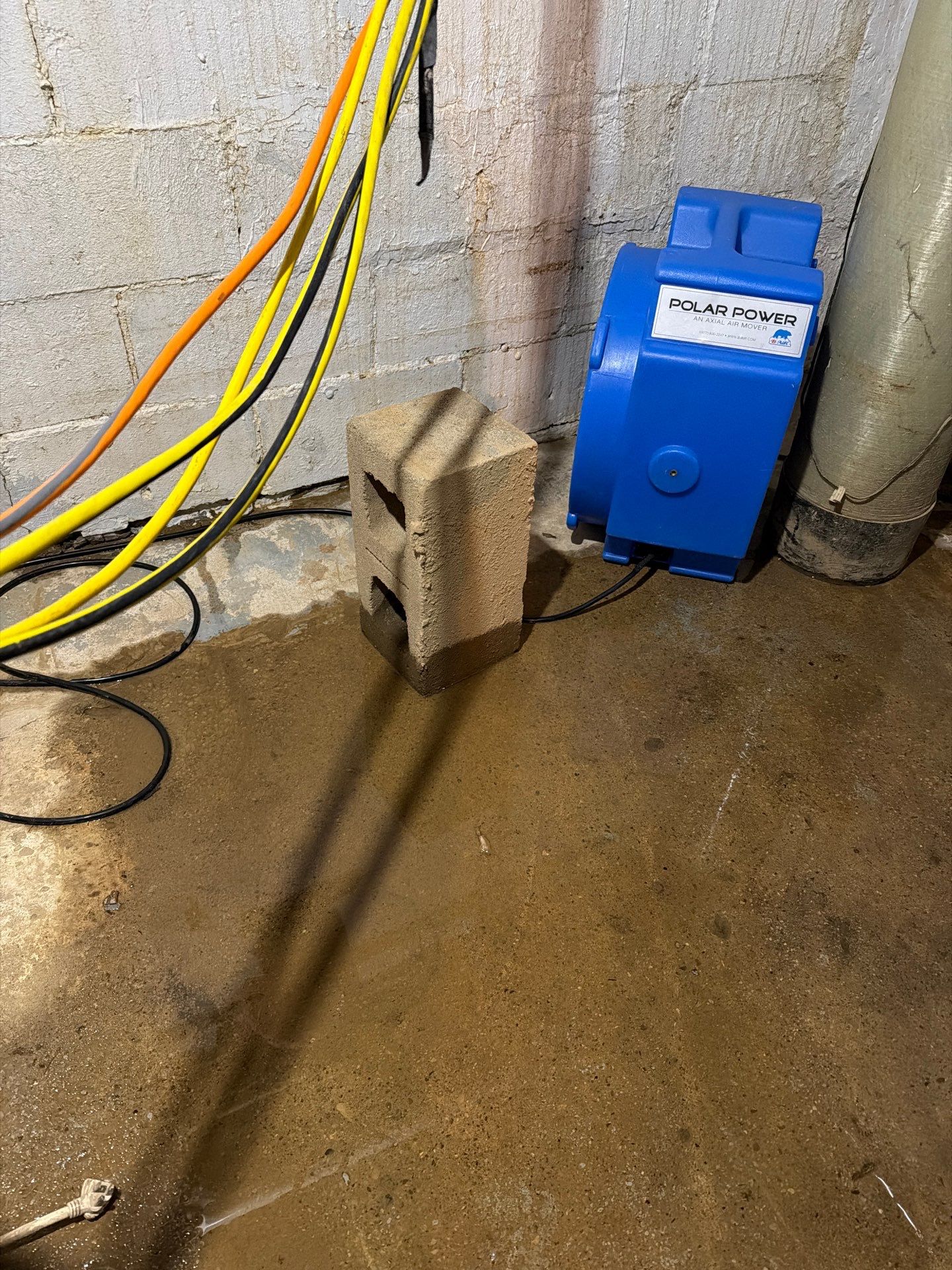
- Structural drying. Commercial dehumidifiers and air movers run 3 to 5 days. Moisture meters confirm dry standard before equipment leaves.
- Clearance check. ATP testing or visual inspection confirms the space is safe to rebuild.
- Reconstruction. New drywall, flooring, trim, and paint. This is often a separate phase tied to your insurance scope.
Common Causes We See in Central Indiana
- Mature tree roots invading clay sewer laterals (very common in older Gas City neighborhoods)
- Heavy rain overwhelming the municipal combined sewer system
- Sump pump failure during a power outage
- Flushed wipes, grease, or feminine products clogging the main line
- Frozen and cracked sewer pipes during January cold snaps
- Failed backwater valves on older homes
If your basement floods regularly during storms, the sewage event may be one symptom of a larger drainage problem. Our team often coordinates sewage cleanup alongside basement flooding repair so you are not paying for two separate mobilizations.
What Not to Do
- Do not run the HVAC system. You will pull contaminated air through every room.
- Do not use household bleach as your only disinfectant. It does not penetrate porous materials.
- Do not toss damaged items before photographing them. Adjusters need proof of loss.
- Do not sign a contractor's "assignment of benefits" without reading every line.
- Do not wait until morning. Every hour of contact time multiplies the damage.
- Do not let children or pets back into the space until clearance testing is complete, even if it looks dry.
- Do not assume a small backup is only a small problem. Pathogens do not scale with visible water.
How to Reduce the Risk of a Repeat Backup
Once the cleanup is done, take a weekend to harden the home against the next event. Gas City Water Restoration crews recommend a short checklist:
- Install a backwater valve on the main sewer line if your home does not already have one
- Add a battery backup or water-powered secondary sump pump
- Schedule a camera inspection of your lateral every 2 to 3 years if you have mature trees
- Keep a list of what should never go down the drain: wipes (even "flushable"), grease, paper towels, cat litter, dental floss
- Elevate the furnace, water heater, and any electronics in the basement onto 4-inch pads
- Move stored boxes off the floor and into sealed plastic bins on shelving
- Confirm your insurance endorsement matches the replacement cost of basement finishes, not just the structure
What Sewage Cleanup Costs in Gas City
Pricing depends on the volume of water, square footage affected, materials damaged, and whether the contamination reached HVAC or finished living space. Realistic ranges:
- Small backup, one bathroom or utility room: $2,500 to $4,500
- Finished basement, partial: $5,000 to $10,000
- Full finished basement with HVAC contamination: $10,000 to $25,000+
- Commercial or multi-unit losses: custom scope, often $20,000 and up
Most Gas City homeowners policies cover sewage backup only if you carry a specific endorsement, usually called "water backup and sump overflow" coverage. Limits range from $5,000 to $25,000. Check your declarations page before you assume.
A few line items that often surprise homeowners on the final invoice:
- Dumpster fees and biohazard disposal surcharges (sewage waste is regulated)
- Contents pack-out, cleaning, and off-site storage
- HVAC duct cleaning if vents pulled odor or aerosolized contaminants
- Anti-microbial fogging as a final step before reconstruction
- Permit fees if drywall or electrical reconstruction triggers inspection
Signs the Backup Is Worse Than It Looks
- Water bubbling up from multiple drains at once (main line clog, not a single fixture)
- Sewage smell coming from HVAC vents (contamination may have reached ductwork)
- Gurgling toilets when you run the washing machine or shower
- Wet spots on first-floor walls when the backup is in the basement
- Soft or spongy flooring more than 48 hours after the event
- Visible mold within 3 days, especially black or greenish patches near baseboards
- Tide marks or staining on walls that appear after the visible water has receded
- Recurring fruit fly or drain fly activity near affected drains, a sign organic material is still embedded in the trap or line
If you see two or more of these in your Gas City home, the contamination has likely spread beyond the visible water line. This is the point where DIY ends.